

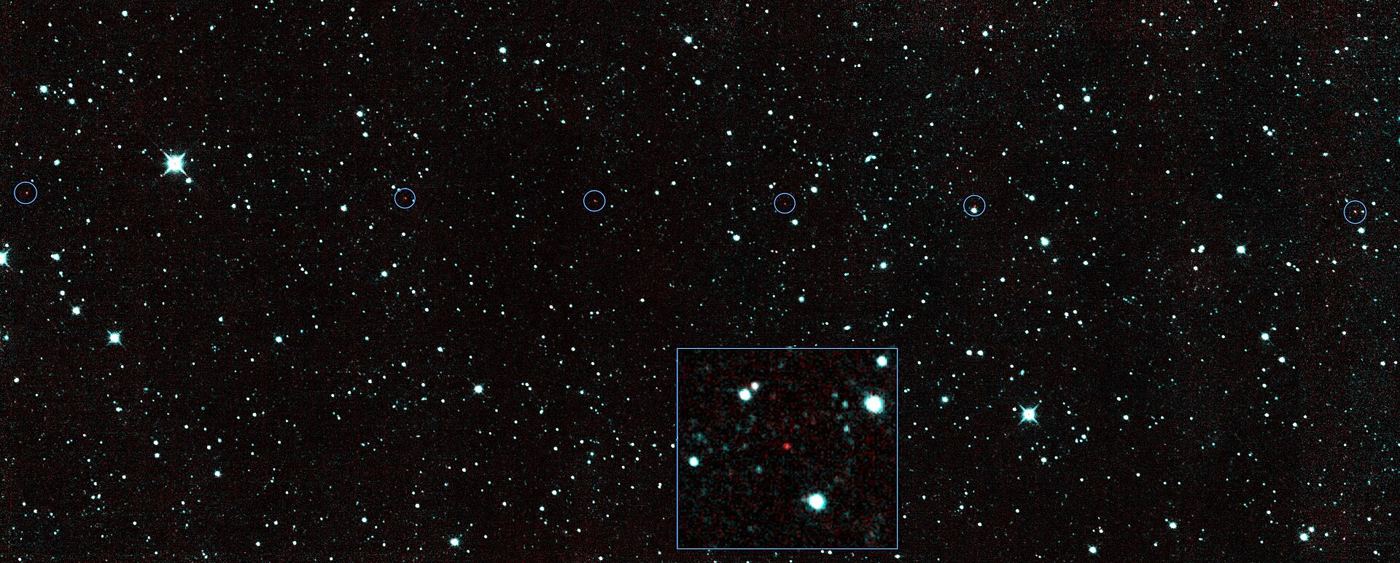
Most asteroids pose no threat to Earth at all, but astronomers have long argued that the responsible way to be sure is to find them, track them and know exactly where they are going. That effort has reached an important milestone, as a long-running survey reports it has now mapped the great majority of mid-size asteroids whose orbits bring them near our planet. These are rocks large enough to cause serious regional damage in a strike, yet small enough to be far harder to spot than the giant asteroids catalogued decades ago. Finding them took years of patient scanning, because a typical object appears as nothing more than a faint moving dot against thousands of fixed stars. Automated software flags the movers, follow-up telescopes confirm each orbit, and only then does an asteroid join the permanent catalogue. With the mid-size map now substantially complete, and no known object on a collision course, planners say attention can shift toward the smaller rocks that are still mostly uncounted, and toward faster warning systems that could give cities days or weeks of notice if one were ever found heading our way unexpectedly.
What the Evidence Shows
Completing the catalogue also improves everyday science, not just planetary defence, because each newly tracked asteroid is a preserved sample of the material that built the planets. Spectroscopic readings taken during the survey reveal which rocks are rich in metal, which carry carbon compounds and which are little more than loose rubble held together by weak gravity. That composition data guides mission planners choosing targets for future spacecraft visits, and it informs engineers designing deflection tests, since pushing a solid rock and pushing a rubble pile are very different problems. Survey teams are candid about the remaining gaps: asteroids approaching from the direction of the Sun are still difficult to detect in bright glare, and objects on unusual tilted orbits can evade scanning patterns aimed mainly at the plane of the planets. New observatories designed to watch the twilight sky, along with a planned space-based infrared telescope, should close much of that blind spot. In the meantime, the finished mid-size map gives civil protection agencies something they never had before, a reliable inventory on which realistic emergency exercises, and calm public information, can finally be based. Reporting and analysis from sources such as National Science Foundation track the same developments, and specialists following the mid-size asteroid map say the direction is now consistent across independent lines of evidence.
The Wider Context
The wider context is a research landscape in which replication and open data now decide reputations. Findings connected to the mid-size asteroid map are being checked by independent groups with shared datasets, and the teams involved publish their methods in full so rivals can test every step. That discipline is slower than a headline cycle, but it is why results in this area increasingly survive first contact with scrutiny.
What Happens Next
What happens next in the story of the mid-size asteroid map will be decided by follow-up work already under way: larger samples, longer observation and instruments that have not yet come online. The researchers involved are unusually united on one point, that the current results justify the next investment of time and money. Readers will not have to wait long for the first tests of that claim. You can follow related developments in our coverage of science.
There is a practical lesson in all of this for readers deciding what to do today. Start with the verified facts, be wary of anyone promising certainty, and prefer reversible steps while the evidence is still developing. Circumstances differ by country, income and personal situation, so general guidance should always be weighed against your own context before you act on it in any significant or lasting way.
